Project 02 / 2025 — 2026
SwiftLead · Field systems.
Software that meets the physical world.
A web platform only sees what its field devices can reliably measure and deliver. I built the embedded layer of SwiftLead, connecting sensors and actuators inside a working swiftlet house.
01 / The context
The system needed multiple node types distributed around the building, a way to send readings to the cloud, and essential control that could continue during network interruptions. Hardware also needed practical enclosures for installation and maintenance.
02 / My contribution
- Designed and integrated ESP32 nodes for environmental monitoring, mist-sprayer control, and audio playback.
- Wrote firmware in C/C++ with FreeRTOS and connected the field nodes through ESP-NOW.
- Integrated SHT31-D temperature and humidity sensing and SEN0567 ammonia sensing.
- Implemented gateway-to-cloud communication over MQTT with TLS and local fallback control with hysteresis.
- Designed 3D-printable PETG enclosures in Autodesk Fusion 360 for gateway, nest, pump, and LMB nodes.
- Integrated devices with the backend and took part in laboratory and field reliability testing.
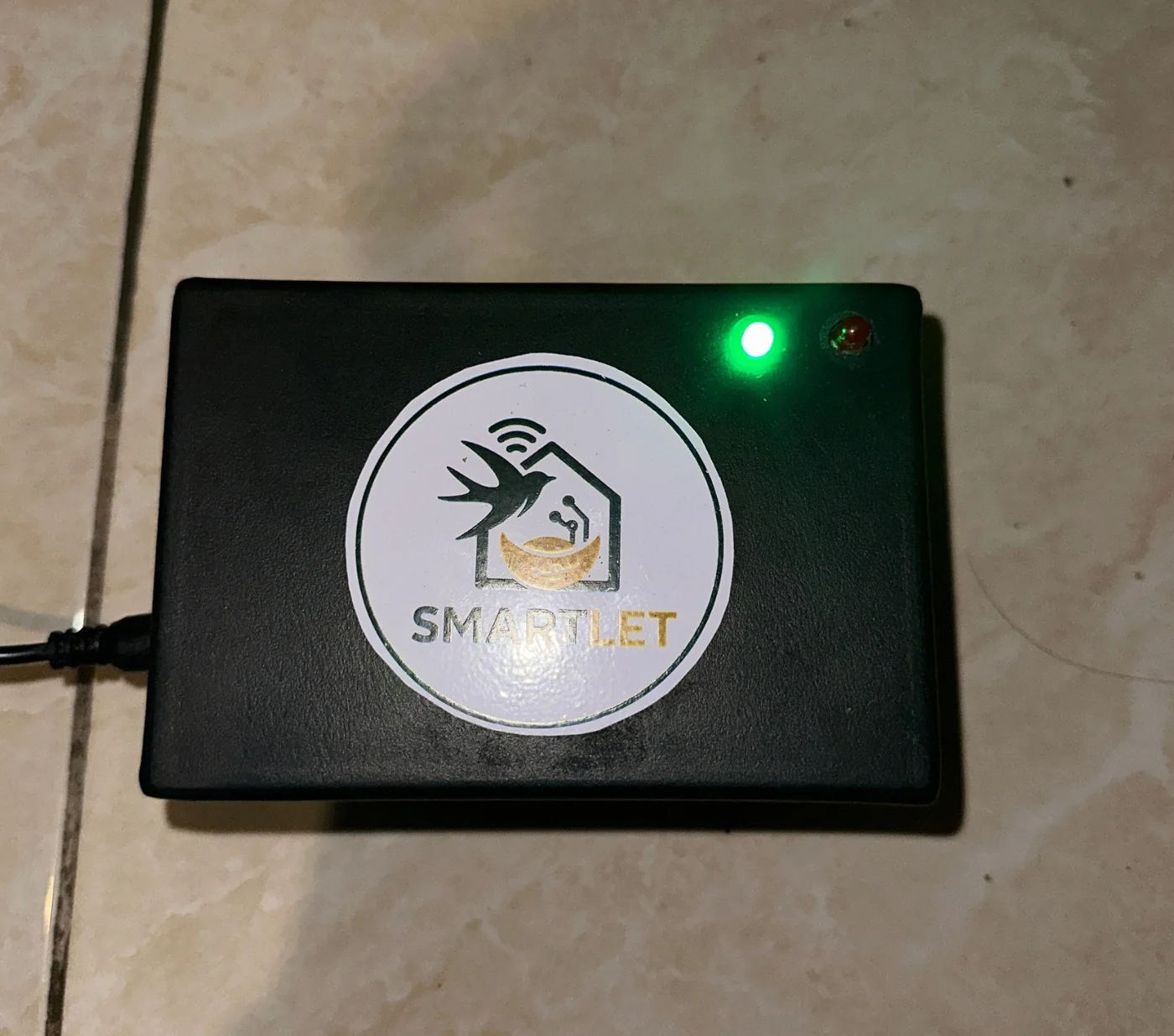
Hardware assembly
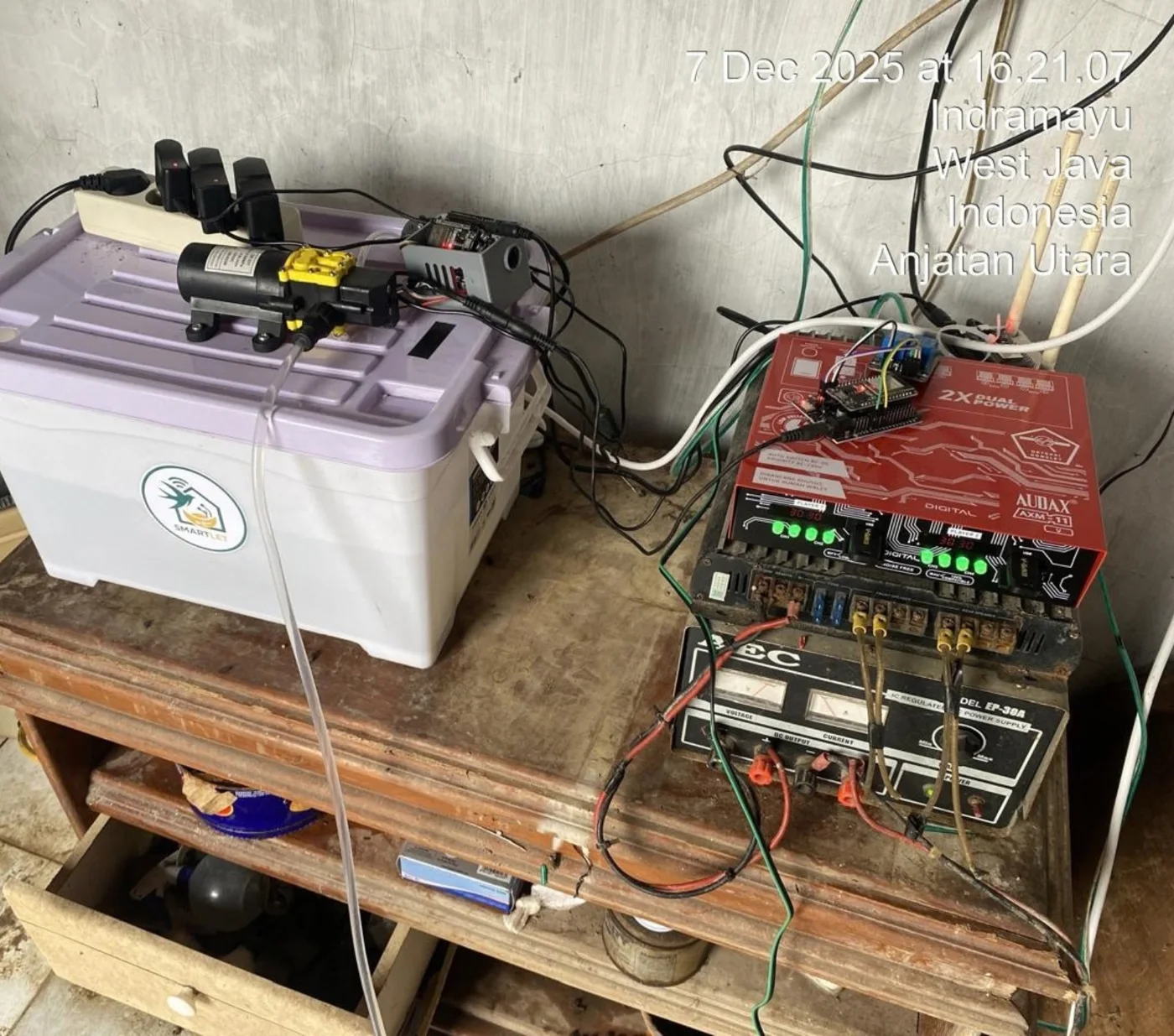
Field installation
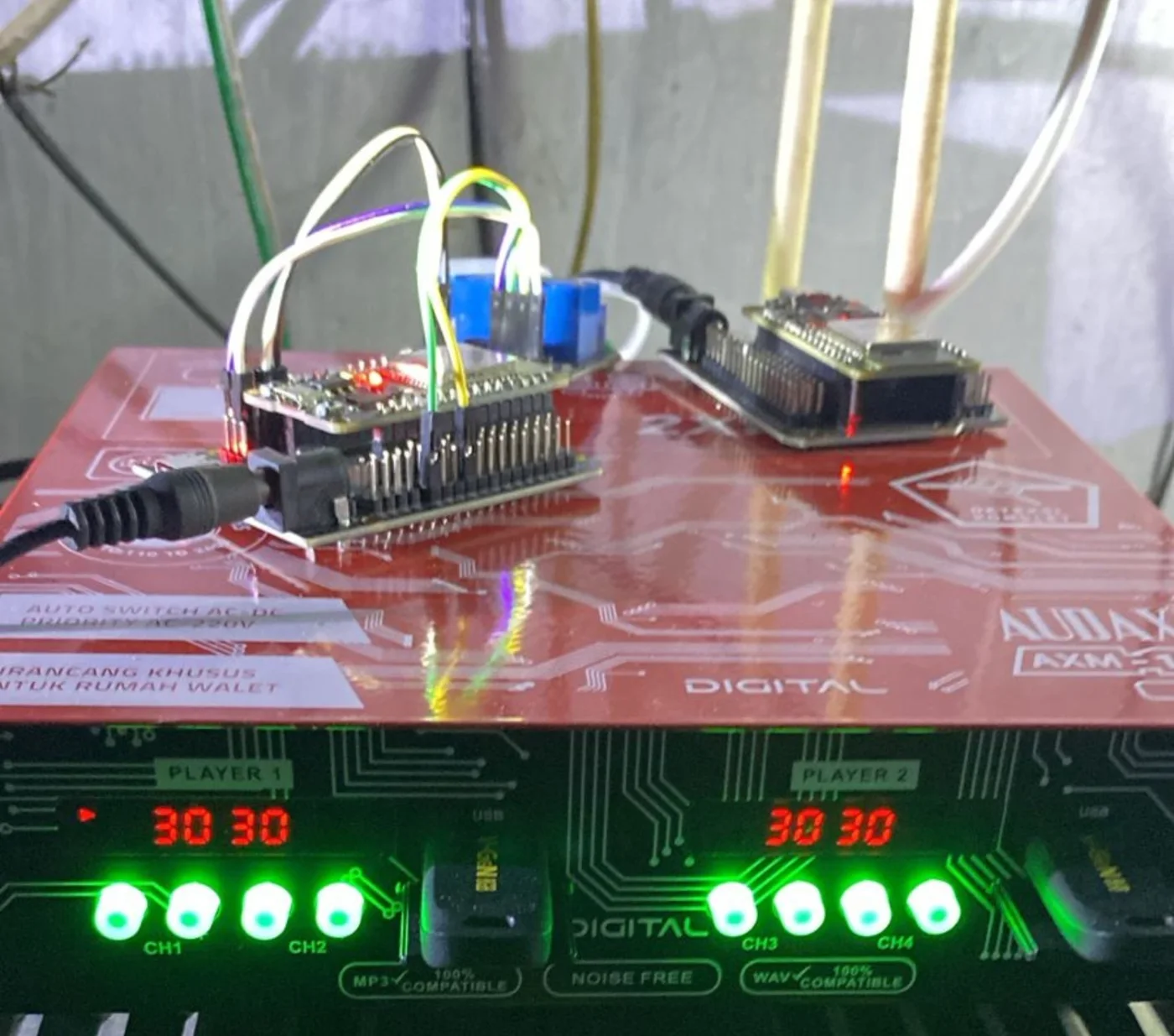
Actuator integration
03 / Engineering decisions
A local network with one cloud gateway
ESP-NOW connects field nodes through the ESP32 radio. The gateway bridges that network to the MQTT broker, separating local device communication from cloud transport.
Four nodes, four responsibilities
Nest nodes handle sensing and internal audio; pump nodes control misting; LMB nodes handle entrance audio; the gateway aggregates telemetry and coordinates control.
Control close to the hardware
Local fallback with hysteresis maintains essential actuator operation during cloud interruptions and avoids rapid switching around a threshold.
04 / What came out of it
The hardware was assembled, integrated with the backend, and installed at the Indramayu project site. Testing covered sensor readings, local and cloud communication, actuator response, and behavior during connectivity loss.
Reliability includes the physical details: wiring, enclosures, sensor placement, and what the device does when a dependency disappears. Those details have to be considered alongside the firmware.